
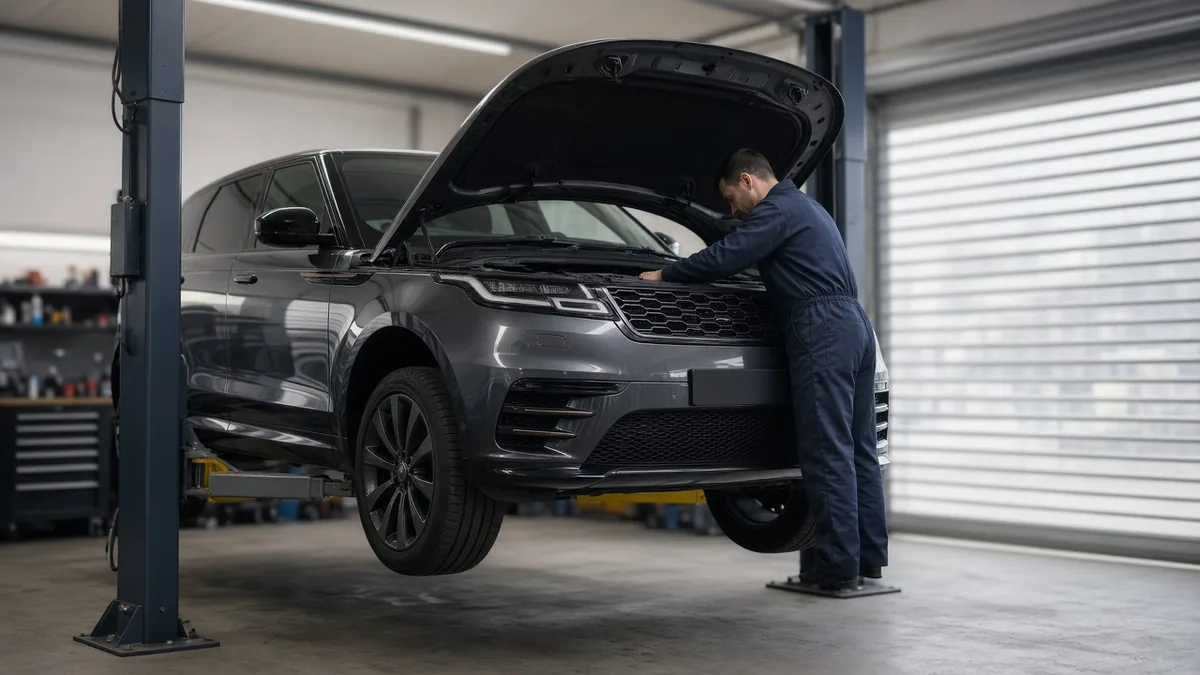
A Range Rover engine replacement in the UK typically costs £3,500 to £9,500 fitted with a reconditioned engine, depending on the engine. A 3.0 V6 diesel usually lands around £3,500 to £7,500, a 4.4 SDV8 around £5,000 to £9,000 and a 5.0 supercharged V8 around £6,000 to £10,500. ENGINE REBUILD quotes used, reconditioned and rebuilt options through partner workshops in London and Peterborough.
Those ranges are wide for a reason. The same badge on the tailgate can hide a 2.0 four-cylinder Ingenium or a supercharged V8, and the labour on a V6 diesel can be double that of a smaller engine. Below I break down where the money goes, what the warning signs look like, and how to decide between a used, reconditioned or rebuilt engine without wasting money.
How much does a Range Rover engine replacement cost in the UK?
Expect roughly £2,800 to £4,800 for a 2.0 Ingenium, £3,500 to £7,500 for the 3.0 V6 diesel, £5,000 to £9,000 for the 4.4 SDV8 and £6,000 to £10,500 for the 5.0 supercharged V8, all reconditioned and fitted. Main dealer new engines commonly run £10,000 to £22,000 or more.
The table below pulls together current published UK prices and guide ranges from independent specialists and price comparison sites. Treat it as a budgeting guide, not a quote. Prices were last checked on 4 November 2026.
| Engine (code) | Typical models | Used engine (supply only) | Reconditioned, supplied and fitted | New, main dealer |
|---|---|---|---|---|
| 2.0 Ingenium diesel (204DTD) | Evoque, Velar, Range Rover Sport (later) | £1,000–£2,500 | £2,800–£5,500 | £8,000+ |
| 3.0 TDV6 / SDV6 diesel (306DT) | Range Rover Sport L320/L494, Vogue L322/L405 | £1,500–£2,500 | £3,500–£7,500 | £10,000–£15,000+ |
| 4.4 SDV8 diesel (448DT) | Range Rover L405, Sport L494 | £1,500–£3,000 | £5,000–£9,000 | £12,000–£20,000+ |
| 5.0 V8 supercharged petrol (508PS) | Sport, Vogue, Autobiography, SVR | £2,000–£3,000 | £6,000–£10,500 | £15,000–£22,000+ |
For context, some real listed prices: one specialist lists a reconditioned Range Rover Sport 5.0 V8 supply-and-fit at £6,495, while another lists a reconditioned 3.0 TDV6 (306DT) at £5,450 as a bare engine on exchange, before VAT and fitting. That gap is why you should always ask whether a price is “supply only” or “supplied and fitted”.
What affects the price of a Range Rover engine replacement?
Four things move the price most: which engine you have, how much labour it takes to remove, whether you choose used, reconditioned or rebuilt, and which ancillaries need replacing at the same time. Turbos, injectors, coolers and timing parts can add hundreds or thousands to the final bill.
- Engine code. A four-cylinder Ingenium is a smaller, cheaper unit than a twin-turbo V6 or a supercharged V8.
- Labour time. On many V6 diesel models the body is lifted or the front end stripped for access. One comparison site quotes 14 to 18 hours for the Discovery’s 3.0 V6, which shares its engine with several Range Rovers.
- Ancillaries. If the engine failed from oil starvation, the turbo(s) and oil cooler are often contaminated. Reusing them is the classic way to kill a fresh engine.
- Fluids and parts. Oil, coolant, filters, gaskets and sometimes a new flywheel or mounts.
- Coding and checks. Post-fit diagnostics, adaptations and a road test.
What are the symptoms of a failing Range Rover engine?
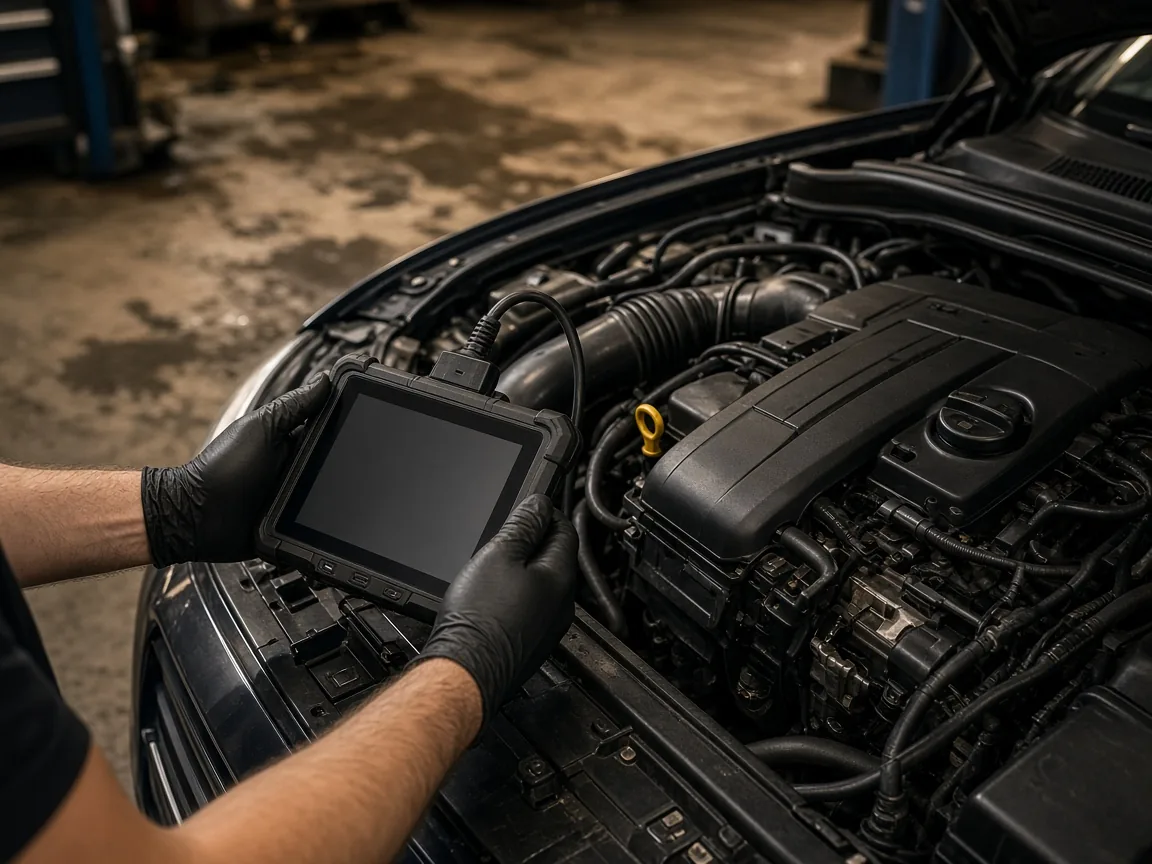
The main warning signs are a deep knock that rises with revs, the oil pressure light flickering at idle, a rattle on cold start, heavy smoke, sudden loss of power or limp mode, and coolant or oil loss you cannot trace. If you hear a knock, stop driving and get it checked.
- Knocking from the bottom of the engine, often louder under load (bearing or crankshaft wear).
- Rattle for a few seconds on start-up (timing chain, guides or tensioner).
- Oil pressure warning, or a “low oil pressure” message.
- Blue or white smoke, or oil being used faster than normal.
- Rising oil level on a diesel (fuel dilution from repeated DPF regenerations).
- Overheating, or coolant disappearing with no visible leak.
- Engine management light with limp mode and loss of power.
Why do Range Rover engines fail?
Most engine failures we see trace back to oil: long service intervals, the wrong grade, low oil level, or oil diluted with diesel. On the 3.0 V6 diesel this often shows up as crankshaft or bearing failure; on the 2.0 Ingenium, timing chain stretch is the common complaint.
Other causes include overheating after a coolant leak, turbo failure sending debris into the intake, and short-trip driving that never lets a diesel complete its DPF regeneration. None of these are guaranteed to happen, and plenty of engines run well past 150,000 miles on regular oil changes. But when a Range Rover engine does let go, the repair is rarely small, which is why diagnosis matters before you buy anything.
Should I choose a used, reconditioned or rebuilt Range Rover engine?
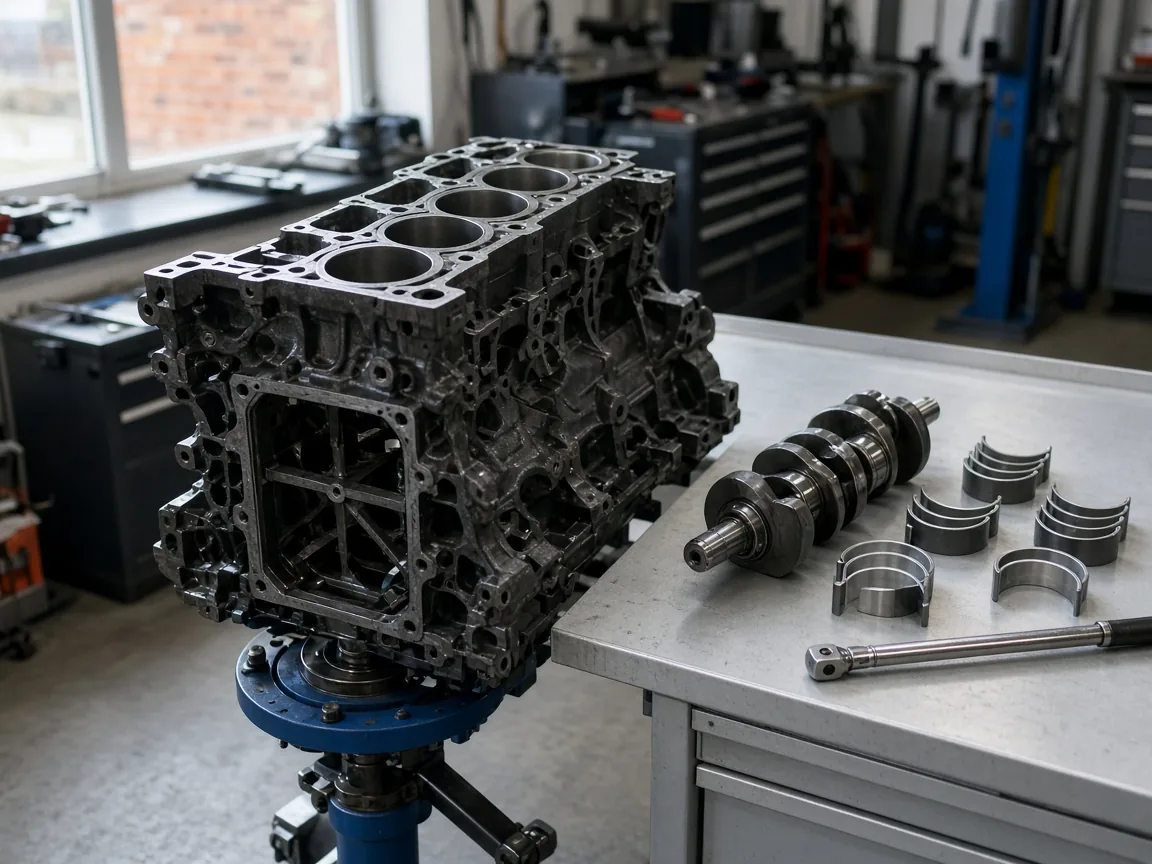
For most owners keeping the car, a reconditioned engine offers the best balance of cost, risk and warranty. A used engine suits a lower-value car or a tight budget. Rebuilding your own engine makes sense when the block and crank are repairable and you want to keep the original numbers-matching unit.
| Used engine | Reconditioned engine | Rebuild your engine | |
|---|---|---|---|
| What it is | Removed from a donor car and tested, not rebuilt | Stripped, machined and rebuilt with new wear parts | Your own engine stripped, repaired and reassembled |
| Typical fitted cost (3.0 V6 diesel) | Lowest, roughly £2,500–£4,000 | £3,500–£7,500 | £3,000–£8,000 depending on damage |
| Typical warranty | 30–90 days | 6–12 months | 6–12 months |
| Main risk | Unknown history and mileage | Quality varies by supplier | Hidden damage found on strip-down |
| Best for | Lower-value cars, short ownership | Most owners keeping the car | Sound block, localised fault |
You can read more about each route on our reconditioned engines, used engines and engine rebuild pages.
Which Range Rover models and engines are covered?
The engines we are asked about most are the 3.0 TDV6/SDV6 and 4.4 SDV8 diesels, the 5.0 supercharged V8 petrol and the 2.0 Ingenium. They cover the Range Rover Vogue (L322, L405), Range Rover Sport (L320, L494), Velar and Evoque across roughly 2005 to the present.
| Model | Common engines | Things to check |
|---|---|---|
| Range Rover Sport L320 (2005–2013) | 2.7 TDV6, 3.0 TDV6/SDV6, 5.0 V8 | Crankshaft and bearings, timing |
| Range Rover Sport L494 (2013–2022) | 3.0 SDV6, 4.4 SDV8, 5.0 V8, 2.0 Ingenium | Oil dilution, timing chain on Ingenium |
| Range Rover L322 / L405 | 3.0 TDV6/SDV6, 4.4 SDV8, 5.0 V8 | Oil cooler and turbo on SDV8 |
| Evoque and Velar | 2.0 Ingenium diesel and petrol | Timing chain stretch, oil level |
Not sure which engine is in yours? Your V5C, VIN or registration is enough. You can also browse our Land Rover and Range Rover engines page, and if you also run a Jaguar, many of the same V6 and Ingenium units appear on our Jaguar engines page.
How do I avoid paying too much for a Range Rover engine?
Get the fault diagnosed before you buy anything, compare like for like (supply only versus supplied and fitted, with or without VAT), ask exactly what the reconditioning includes, and get the warranty terms in writing. A cheap quote that leaves out turbos or fluids is rarely cheap.
- Confirm the engine code against your VIN.
- Ask whether the price includes fitting, fluids, coding and VAT.
- Ask what was replaced: bearings, timing chain kit, oil pump, seals, head gasket.
- Ask what happens to the turbos and oil cooler if the old engine starved of oil.
- Read the warranty: length, mileage cap, labour cover, servicing conditions.
Workshop tip: “If the old engine spun a bearing, the oil cooler and turbos have had metal through them. Flush or replace them, or you are pouring that debris straight into the new engine. It is the single most common reason a replacement fails early.”
ENGINE REBUILD partner workshop team
Where can I get a Range Rover engine replaced near me?
ENGINE REBUILD arranges Range Rover engine replacement through partner workshops in London and Peterborough, covering nearby towns such as Cambridge. We quote used, reconditioned and rebuilt options side by side, and every job carries a 6 months unlimited miles or 12 months/12,000 miles warranty.
See our local pages for engine replacement in London, Peterborough and Cambridge, or read how our engine replacement service works from diagnosis to road test.
Frequently asked questions
Is it worth replacing the engine in a Range Rover?
Usually, yes, if the rest of the car is sound. A reconditioned engine fitted for £3,500 to £9,500 often costs far less than buying an equivalent used Range Rover. If the body, gearbox or air suspension also need major work, get those priced first before you commit.
How long does a Range Rover engine replacement take?
With the engine in stock, most specialist workshops need around three to seven working days. The 3.0 V6 diesel is labour-heavy because, on many models, the body or front end has to come off for access. A full rebuild of your own engine takes longer, as parts are machined and inspected.
Does a reconditioned engine come with a warranty?
It should. Typical UK warranties on reconditioned engines run from 6 to 12 months. ENGINE REBUILD offers 6 months with unlimited miles or 12 months/12,000 miles. Always read what is covered, whether labour is included, and what servicing you must keep up to keep it valid.
Can I drive my Range Rover with a knocking engine?
It is not a good idea. A deep knock that rises with revs usually points to bearing or crankshaft trouble, and driving on can turn a repairable engine into scrap. Switch off, check the oil level, and have it recovered and diagnosed instead.
Is a used Range Rover engine a false economy?
It can be. Used engines cost less, but their history is often unknown and warranties are short, typically 30 to 90 days. On engines with known crankshaft or timing chain weak points, a cheap used unit may carry the same fault that killed your original one.
Do you need my VIN or engine code for a quote?
Yes, it helps. Range Rover engines vary by year, emissions standard and turbo setup, even under the same badge. Your registration, VIN or engine code (for example 306DT or 508PS) lets us match the right unit and give a firm price rather than a guess.
Get a free Range Rover engine quote
Tell us your registration and what the engine is doing, and ENGINE REBUILD will come back with used, reconditioned and rebuild prices. Request your free quote, call 020 8089 1373, WhatsApp +44 7936 418074, or use our contact page.
Related reading
Sources
- Range Rover Engine Specialist: Engine replacement vs new car, 2026 cost table
- Engine Solutions: Range Rover engine supply and fit UK guide (cost by engine code)
- Engine Solutions: Range Rover Sport 5.0 V8 recon supply and fit listing (£6,495)
- GND Motors: Range Rover 3.0 TDV6 306DT reconditioned engine listing (£5,450, exchange, ex VAT)
- LandRoverEngine.uk: 3.0 TDV6/SDV6 price guide and labour estimate
- Engine Finders: TDV6 used and reconditioned price ranges
Prices last checked 4 November 2026. Written by the ENGINE REBUILD team.